Robotic Dental Implant Surgery: Is It the Future?
In this excerpt from the Remedico podcast, SameDay Dental Clinic's two co-founders were asked where digital dentistry is heading next. According to Dr. Costa Nicolopoulos, Co-Founder and Specialist Oral & Maxillofacial Surgeon, the next frontier is robotic implant surgery.
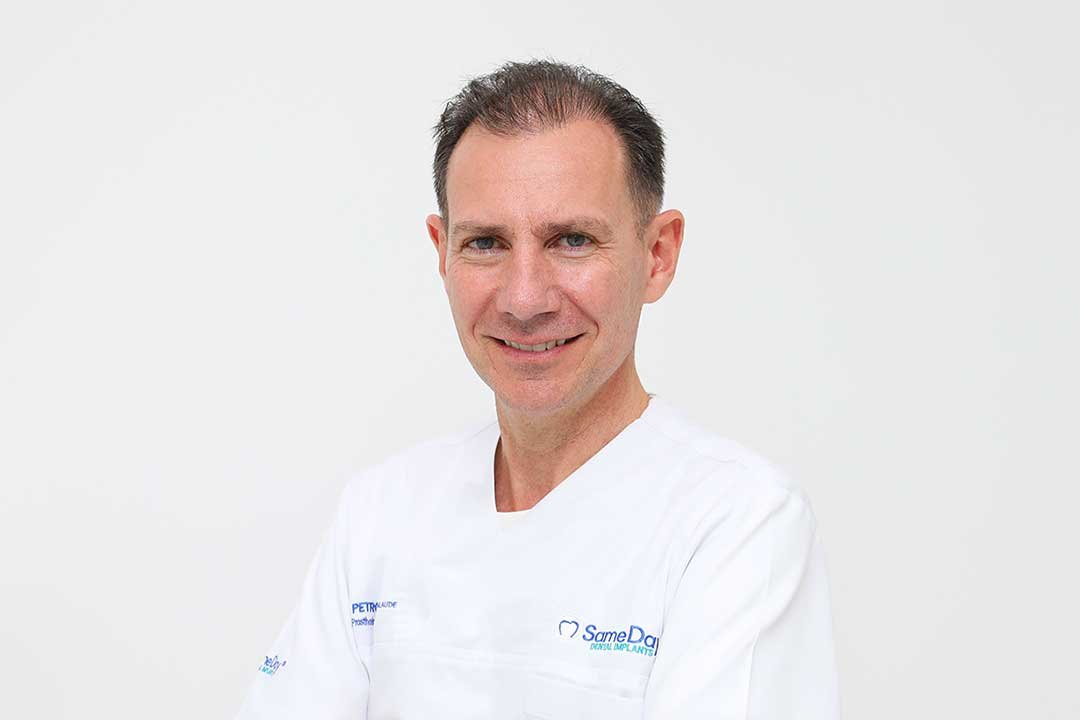
Dr. Petros Yuvanoglu, Co-Founder and Specialist Prosthodontist, added an important point. New technology only delivers when the clinician using it has mastered the fundamentals first.
How robotic implant surgery would work
Dr. Costa explains that robotic surgery would build on the treatment plan his team makes from digital diagnostic images. The implants are planned on the scan, and the robot would then place them exactly where they were planned.
Robotic systems used in implant dentistry help guide the position, angle, and depth of the implant during surgery.
The surgeon stays responsible, not the robot
Dr. Costa is clear that a robot should never work without a surgeon in control. "The responsibility is not on the robot, it's on the human," he says.
He gives a practical example. During surgery, a surgeon may find softer bone than expected in one area. When that happens, the surgeon has to be able to change the implant's pathway on the spot. That kind of judgment comes from surgical experience, not from software.
This matters most in complex cases. SameDay treats patients with severe bone loss using zygomatic and pterygoid implants. It is a certified ZAGA Center and an Associated Brånemark Osseointegration Center (ABOC). In cases like these, the surgeon's ability to adapt during treatment is essential.
Why digital alone isn't enough
Dr. Petros points to digital smile design as an example. This is a way of planning a new smile on a computer before treatment starts. He calls it very useful. But he says a dentist who lacks the basic hands-on concepts can't rely on digital tools alone.
He sees this in his teaching. Dr. Petros is Adjunct Faculty at Tufts University School of Dental Medicine and Clinical Assistant Professor at Boston University Henry M. Goldman School of Dental Medicine. He notes that universities are steadily moving toward digital, but they now recognize that students still need to learn both analog and digital workflows.Boston University's dental school was also the first in the U.S. to acquire a robotic implant surgery system, in 2019.
The same shift is happening in dental laboratories. In the past, he explains, the dental technician was an artist who built up porcelain by hand, layer by layer. That craft is less common today, which is why he believes combining analog and digital knowledge matters more than ever.
What this means for patients
For Dr. Petros, the goal is to use every available technology without abandoning the skills underneath it. That combination is what keeps a clinic at the forefront.
For patients, the takeaway is simple. A robot or a digital scan is only as good as the specialist planning and directing the treatment. Technology can make implant treatment more precise, but responsibility for every implant stays with the surgeon.
Want to know whether same-day implants are right for you? Book a Free Implant Consultation with SameDay's specialist team.