"Is it four? Is it six? Is it eight?" — it's one of the most common questions we hear at SameDay.
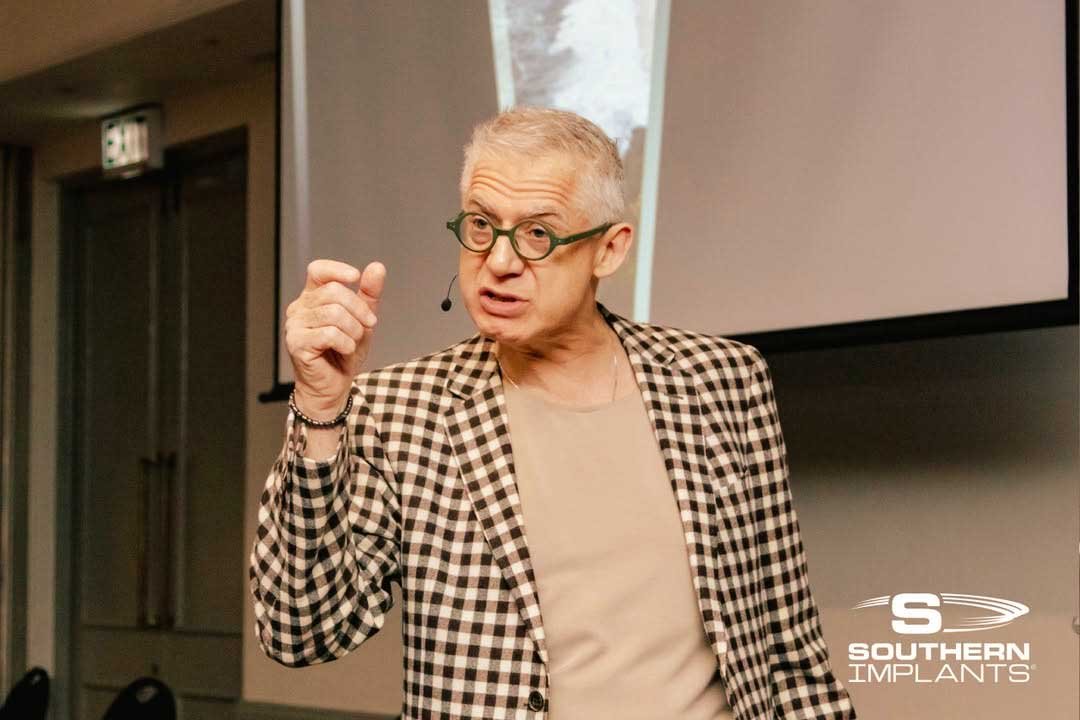
And the honest answer, as Dr. Petros Yuvanoglu explains, is that it depends on the case. Once you visit us, we perform a CBCT scan — a three-dimensional X-ray on our in-house machine — and from there, we build the best treatment plan for you, depending on your needs, the amount of bone you have, and how it is distributed.
Why the Number Varies from Person to Person
Implants need bone to anchor into. The more bone you have — and the better its quality and distribution — the more options your treatment plan can include.
When bone is abundant and well-distributed across the jaw, four to six strategically placed implants are typically sufficient to support a full fixed bridge. When bone has been lost — due to long-term denture wear, gum disease, or natural resorption over time — fewer areas of the jaw can support conventional implants, and the treatment approach needs to adapt accordingly.
Two people walking into the same clinic with the same goal — a fixed set of teeth — may need very different solutions. That is not a complication. It is just anatomy.
What Happens When There Is Not Enough Bone
Bone loss in the upper jaw is very common, particularly at the back of the mouth. When it is severe, conventional implants may not be possible without bone grafting — a procedure that adds time, cost, and recovery.
An alternative is zygomatic and pterygoid implants. These longer implants bypass the deteriorated upper jawbone entirely — zygomatic implants anchor into the cheekbone, while pterygoid implants anchor into the pterygoid bone at the back of the jaw. Both structures remain dense and stable even when the jaw has significantly deteriorated, making it possible to receive a fixed full-arch restoration — on the same day as surgery — without the need for bone grafting.
Not everyone needs these solutions. Whether they are the right choice depends entirely on how much upper jaw bone you have left, and where the loss has occurred. This can only be determined with a proper scan.
Why a 3D Scan Changes Everything
A standard dental X-ray shows a flat image. It cannot reveal the true depth, width, or quality of your bone across the entire jaw.
A CBCT scan — a three-dimensional X-ray — does. It maps your bone in full detail: where there is enough to place implants, where there is not, and where critical structures like nerves and sinuses are located. Without this information, no treatment plan can be accurate.
Full Mouth Rehabilitation with Same-Day Implants
Full Mouth Rehabilitation with Same-Day Implants
Implants We Place at SameDay
Every implant case at SameDay — whether you're replacing one tooth or a full arch — starts with an in-house CBCT scan, so your treatment plan is built around your jaw, not a standard protocol. We offer the full range of implant solutions: single tooth replacements, multiple teeth restorations, All-on-4, All-on-6, and All-on-X fixed bridges, zygomatic and pterygoid implants if you've been told you don't have enough bone, and ceramic implants if you prefer a metal-free option.
There is no universal answer to how many implants you need. Four may be exactly right for one patient. Six may be right for another. A combination of conventional and zygomatic implants may be the best solution for someone else entirely.
What matters is that the plan is built around your bone — after seeing it in three dimensions.
To find out what your case requires, book a complimentary consultation at SameDay Dental Clinic. We are located on Jumeirah Beach Road, Umm Suqeim 2, or you can call us at +971 4 315 8300.